Mattress Materials · Natural Latex
Natural Latex Mattresses: Support, Feel and Care
A latex mattress has a particular way of meeting the body: it yields, but does not seem to disappear beneath it. That balance of contour and response is part of its appeal. Understanding how latex is made, how mattress layers affect its feel, and what care it requires can help you decide whether it belongs in your sleep setup.
A material with a spring in its step
Natural latex begins as sap from rubber trees. In mattress making, the sap is processed into a resilient foam, usually formed into layers or into a single shaped core. The word “natural” is useful, but it is not a complete specification. A mattress may contain natural latex, synthetic latex, or a blend; it may also include other materials in its cover, quilting, fire barrier, or support layers. The label alone does not tell the whole story.
Latex is known for a buoyant, responsive feel. When you change position, it tends to recover its shape quickly, so the surface feels ready to meet you again rather than holding the impression of your last movement. Many sleepers describe this as a gentle lift. It can be a welcome contrast to materials that allow a deeper, slower-feeling sink, though preferences vary: some people enjoy that enveloping sensation, while others would rather feel supported nearer the surface.
That character is not a promise of comfort for everyone. Body shape, weight, sleeping position, temperature, the bed base, and even the thickness of a mattress protector all influence what a mattress feels like in practice. “Latex” names a family of material and construction choices, not one universal level of firmness or one guaranteed sleeping experience.
Natural, blended, and certified: reading the description
When comparing a natural latex mattress, look for a clear account of its composition. Ask what proportion of the latex is natural, whether synthetic latex is included, and what materials form the cover and any quilted layers. If environmental or agricultural claims matter to you, check which certification applies, what it covers, and whether it relates to the latex itself, the finished product, or another component.
Certifications can offer useful boundaries around claims, but they are not interchangeable. A certification for latex content does not necessarily certify every part of a mattress, and certification language should be read in context. The cotton cover, wool quilting, adhesives, and fire barrier may have their own specifications. A careful product description makes these distinctions easier to see.
Two common manufacturing methods are Dunlop and Talalay. In broad terms, both produce latex foam, but the processes differ and can result in different structures and feels. People sometimes describe Dunlop as denser and Talalay as more buoyant or uniform. These are general impressions rather than rules: the finished feel also depends on firmness, thickness, formulation, and the layers around the latex. If you are comparing the two, treat the labels as a starting point, then consider the actual construction and, where possible, test the mattress.
There is also a practical distinction between “natural latex” and “organic latex.” The latter usually refers to specific standards for the material or its production, and the term should be supported by relevant certification details. A mattress can include organic cotton or wool without every component being certified organic. Precise descriptions matter more than an attractive shorthand.
Support is a question of layers
Support is sometimes treated as a synonym for firmness, but the two describe different things. Firmness is the immediate impression of the surface: soft, medium, or firm. Support is about how the mattress accommodates the body and helps maintain a comfortable position over time. A very firm mattress can still feel poorly suited to a particular sleeper; a softer one may feel supportive if its construction allows the shoulders and hips to settle without the rest of the body sagging.
Latex mattresses may use one substantial core or several layers with different firmnesses. In a layered design, the upper layer influences initial comfort and pressure distribution, while lower layers contribute to the overall sense of stability. These functions overlap, and the result depends on the complete arrangement—not merely the firmness rating printed on one layer.
Sleep position offers a useful, though imperfect, way to begin thinking about fit. Side sleepers often look for enough give at the shoulder and hip to reduce concentrated pressure. Back sleepers may prefer a surface that allows some contouring while keeping the torso comfortably supported. Stomach sleepers commonly need to consider whether the hips sink too far, which can make a mattress feel uncomfortable. These are starting points, not prescriptions. Personal comfort and any specific clinical advice should take precedence over a rule of thumb.
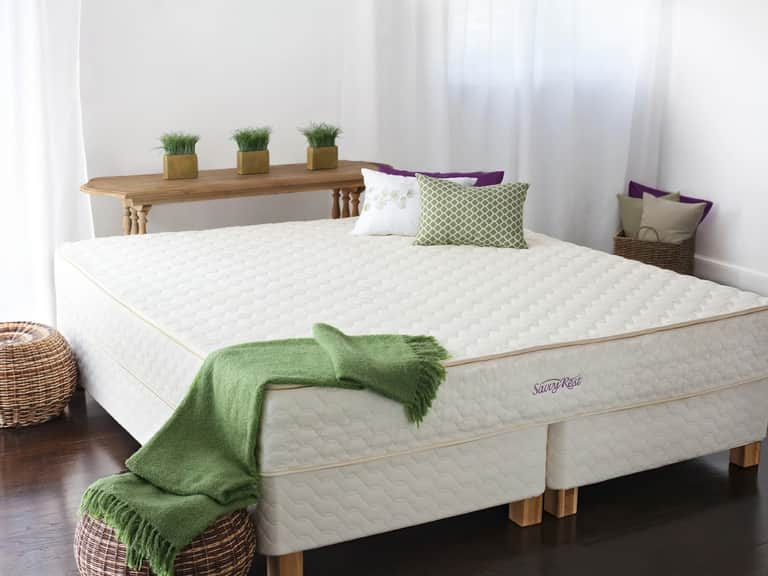
People sharing a bed may have different needs. Some layered mattresses allow the firmness on each side to be configured separately, which can make a shared surface more adaptable. The Savvy Rest Serenity Latex Mattress, for example, is a 10-inch mattress built from three layers of Dunlop and/or Talalay latex, with soft, medium, or firm choices. Its Queen and King configurations can be customised by side, and the manufacturer describes an exchange policy for layers. Details and conditions can change, so confirm current options directly before making a decision. You can read more about the Savvy Rest Serenity Latex Mattress.
Layer customisation is not the same as clinical fitting. If pain, reduced mobility, pressure injury risk, or another health concern affects your choice, a healthcare professional or occupational therapist can help you think through the relevant needs. A mattress can influence comfort and positioning, but it should not be presented as a treatment for a medical condition.
Pressure distribution and the feel of movement
Because latex can contour while remaining springy, it may distribute contact across a broader area than a surface that feels very hard or unyielding. In everyday terms, the mattress compresses where the body presses on it, then pushes back. How much pressure is relieved depends on the sleeper, the firmness and thickness of the latex, the bed’s other layers, and the way the body is positioned.
It is worth distinguishing general comfort from pressure care. A domestic mattress description may refer to pressure relief, but that wording does not establish that the mattress is suitable for preventing or treating pressure injuries. People who are at risk of skin breakdown, spend extended periods in bed, or require specialist positioning should seek advice from an appropriate clinician or care team. Specialist support surfaces are selected according to individual assessment, not simply by material name.
Latex’s responsiveness can also affect how movement feels. Some sleepers appreciate that it is easier to turn or change position on a surface that quickly regains its shape. A partner may notice movement differently depending on the mattress construction and the bed frame. Claims about motion transfer should be considered alongside the entire mattress, the size of the bed, and the sleeper’s own sensitivity. A showroom trial can be informative, but it cannot perfectly reproduce a full night’s sleep.
Airflow, warmth, and the cover
Latex is often chosen by people interested in a mattress that feels less enveloping than some foam alternatives. Its open structure and the design of the mattress may permit air to move through the material. Still, “breathable” does not mean cool under every condition. Room temperature, bedding, sleepwear, humidity, body temperature, and the mattress cover all play their part.
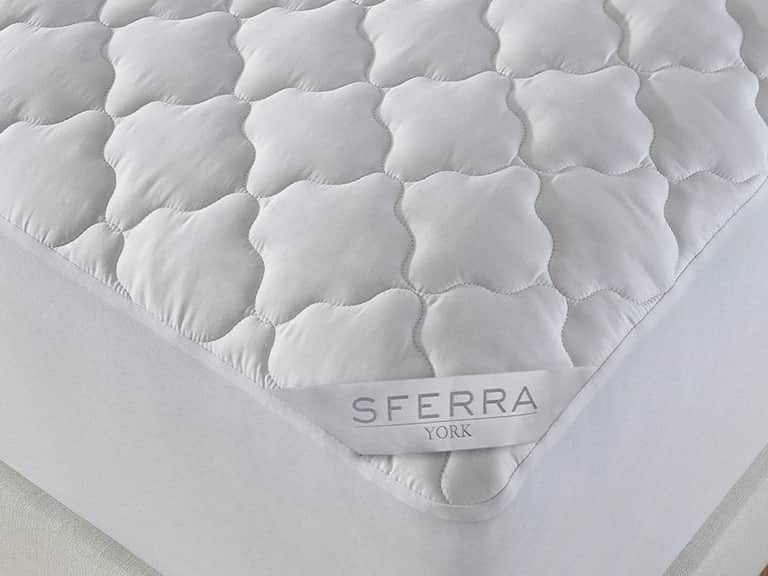
A thick, closely quilted cover can change the surface feel and may affect how readily heat and moisture move away from the body. Wool, cotton, and other fibres are sometimes used in covers or quilting; their properties differ, and the quality of the construction matters. If you tend to sleep warm, ask about the cover, quilting, and any waterproof or protective layer you plan to use. A protector can be useful for keeping a mattress clean, but an impermeable or heavy one may alter the sensation of the surface.
Wool quilting appears in some latex mattress designs, including the Serenity described above. It is often included for its natural properties and its role in the mattress construction. Anyone with a sensitivity or allergy should check material details rather than assume that a “natural” material will be suitable. The same care applies to latex itself: people with a known latex allergy should seek professional advice and verify product composition before choosing a mattress.
Choosing a mattress for the bed base
A mattress does not work in isolation. Before choosing one, check that its dimensions match the frame and that the base is appropriate for the manufacturer’s requirements. A mattress designed for a supportive, level platform may perform differently on a widely spaced slatted base. Follow the maker’s instructions about slat spacing, centre support, foundations, and weight limits.
Adjustable bases require particular attention. Some latex mattresses are designed to flex with an adjustable bed, but compatibility should be confirmed for the exact model and size. A mattress that is too thick, too rigid, or not approved for the base may not bend as intended. Check whether the base and mattress warranties specify any restrictions, and make sure the mattress can be safely secured when the bed is elevated.
In a care setting or home where the bed is used for assistance with daily activities, other practical questions may matter: the height of the bed, access around its sides, ease of cleaning, and whether bedding stays in place when the base moves. The mattress and the bed frame should be considered together. If equipment is being selected for a person with mobility or medical needs, involve the relevant care professional rather than relying on a product description alone.
A measured approach to firmness
Firmness ratings are not a universal language. One maker’s medium may feel like another’s firm, and the same mattress can feel different to people of different sizes or sleeping habits. If you can test a mattress, spend more than a few minutes on it. Try your usual sleep position, notice whether you feel pressure at the shoulders or hips, and consider whether changing position feels easy.
For online comparisons, gather details rather than relying on a single adjective. Useful questions include:
- What is the latex composition, and are natural and synthetic components distinguished?
- How many layers are present, and what are their thicknesses and firmness options?
- Can the layers be rearranged or exchanged, and what conditions apply?
- What materials are used in the cover, quilting, and fire barrier?
- Is the mattress compatible with your base, including an adjustable base if relevant?
- What are the care instructions, warranty terms, delivery arrangements, and return conditions?
A generous trial period may help, but it is not a substitute for reading the terms. Check who pays for collection, whether there are fees, and whether the mattress must meet particular conditions to qualify. Likewise, a long warranty can be reassuring, but its exclusions and remedy are as important as its headline duration.
Care: protect the mattress without complicating it
Good care begins with the manufacturer’s instructions. Latex mattresses are not all made alike, and cleaning advice for one cover may be inappropriate for another. Many models have removable covers that are not machine washable; a zipper does not automatically mean the cover should be removed. If the instructions say to spot-clean, use a small amount of suitable cleaner and avoid soaking the mattress. Excess moisture can be difficult to remove and may damage materials.
Use a mattress protector if it is appropriate for the mattress and does not interfere with its intended feel or function. Wash sheets and protectors according to their own labels, and deal with spills promptly. Allow the mattress and bedding to dry fully before making the bed. Regularly check for signs of wear, damage, or moisture, particularly if the bed is used by someone who needs additional support or spends prolonged periods resting.
Rotation instructions vary. Some mattresses are designed to be rotated head-to-foot; others are not reversible and should never be turned upside down. A layered mattress may have specific guidance about whether its components can be rearranged. Do not assume that flipping or rotating is always beneficial. Follow the model’s care guide, and keep any assembly or layer information in a place where it can be found later.
Latex is relatively resilient, but resilience is not indestructibility. Avoid folding or bending a mattress beyond the manufacturer’s directions, and take care during moving. A mattress that is unusually heavy or made of separate layers may be easier to handle with assistance. For a bed used in a care environment, establish a simple inspection and cleaning routine that matches the setting’s infection-control procedures and the product instructions.
What latex is—and what it is not
Natural latex can be a durable, comfortable mattress material, but it is not automatically the right choice for every sleeper. Its responsive feel may appeal to someone who wants contouring without a pronounced sinking sensation. Its layers can offer useful flexibility where firmness options or separate sides are available. Yet weight, comfort preferences, temperature, allergies, budget, and base compatibility all deserve attention.
Nor does the word “natural” settle questions about sustainability, safety, or performance. Those depend on the sourcing, processing, composition, certifications, manufacturing, and lifespan of the finished product. Ask for specifics, compare like with like, and be wary of claims that promise health outcomes without clear evidence. The most helpful mattress description is a plain one: what is inside, how it is assembled, what it is designed to do, and how it should be cared for.
In the end, a good mattress decision is often less dramatic than the advertising suggests. It is a matter of finding a surface that feels comfortable, works with the bed base, fits the room and the sleeper, and can be maintained without guesswork. Natural latex offers one distinctive combination of spring, contour, and layered choice. Whether that combination suits you is best answered not by a slogan, but by careful comparison and, when possible, a thoughtful trial.